The Ocean Within
Imago Garage
Rua do Vale de Santo António 50A, 1170-381 Lisboa
16 . 10 . 2026 → 14 . 11 . 2026
wednesday - saturday → 02:30 pm – 06:30 pm
Artist
Yvette Monahan
Yvette Monahan (1977) is an Irish photographer and artist. Her practice explores the intangible qualities of both external and internal landscapes, weaving together elements of myth and geography. Since earning her MFA in Photography from Ulster University in 2013, Yvette has shared her work in numerous exhibitions, including those at RHA Dublin, Belfast Exposed, PhotoIreland, the Royal Photographic Society (Bristol), Unseen (Amsterdam), Fotohof (Salzburg), and the Lishui Festival (China). Yvette has also been nominated for the Prix Pictet Sustainability and Environment prize three times, capturing the essence of her commitment to meaningful storytelling.
yvettemonahan.com | @yvettemonahan
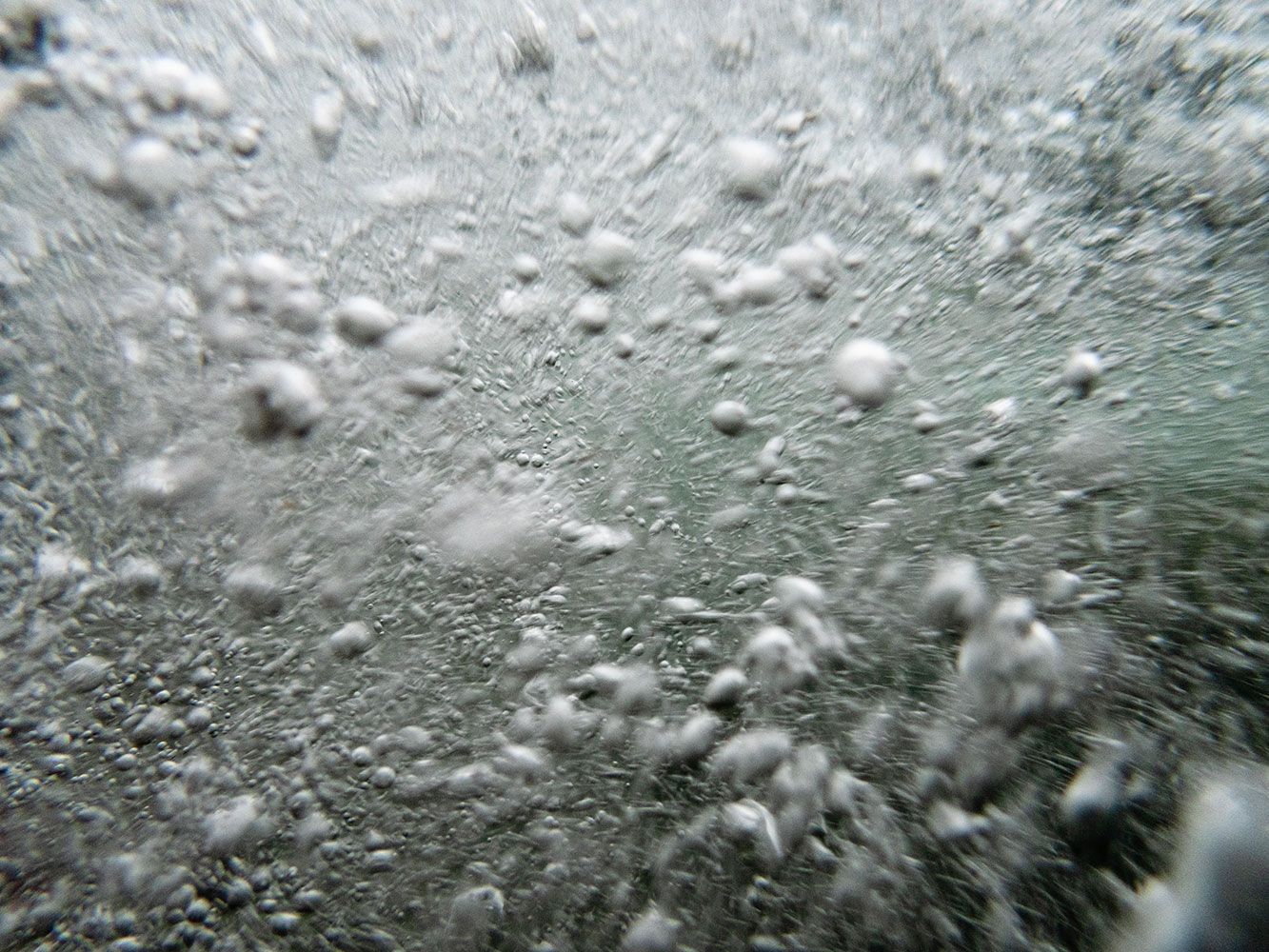
Rachel Carson, in her 1951 book The Sea Around Us, wrote that our ‘world is a water world, a planet dominated by its covering mantle of ocean, in which the continents are but transient intrusions of land above the surface of the all-encircling sea’. ( 1 ) It’s a reminder that the ocean is not just a backdrop for life on Earth, but its regulating heart. Carson’s insight sustains and scaffolds this work: to understand the ocean today, we must recognise that we are its continuation, not apart from it.
How, then, do we understand an underwater world we no longer inhabit, even as we still carry it within us – in our cells, our blood, our senses. As Carson wrote, ‘Every animal in the world followed the habit it learned in the ancient sea.’ The mammalian ear is a perfect example. Over evolutionary time, the gill arches of our fish ancestors reshaped themselves into the cartilage of the outer ear. ( 2 ) Built on a shared genetic architecture, this structure allows the fish to breathe and the mammal to listen. In utero, the human ear begins as a small, shell-shaped fold that gradually becomes the oval that funnels sound into our bodies. We inherit the ocean as the ocean is within us.
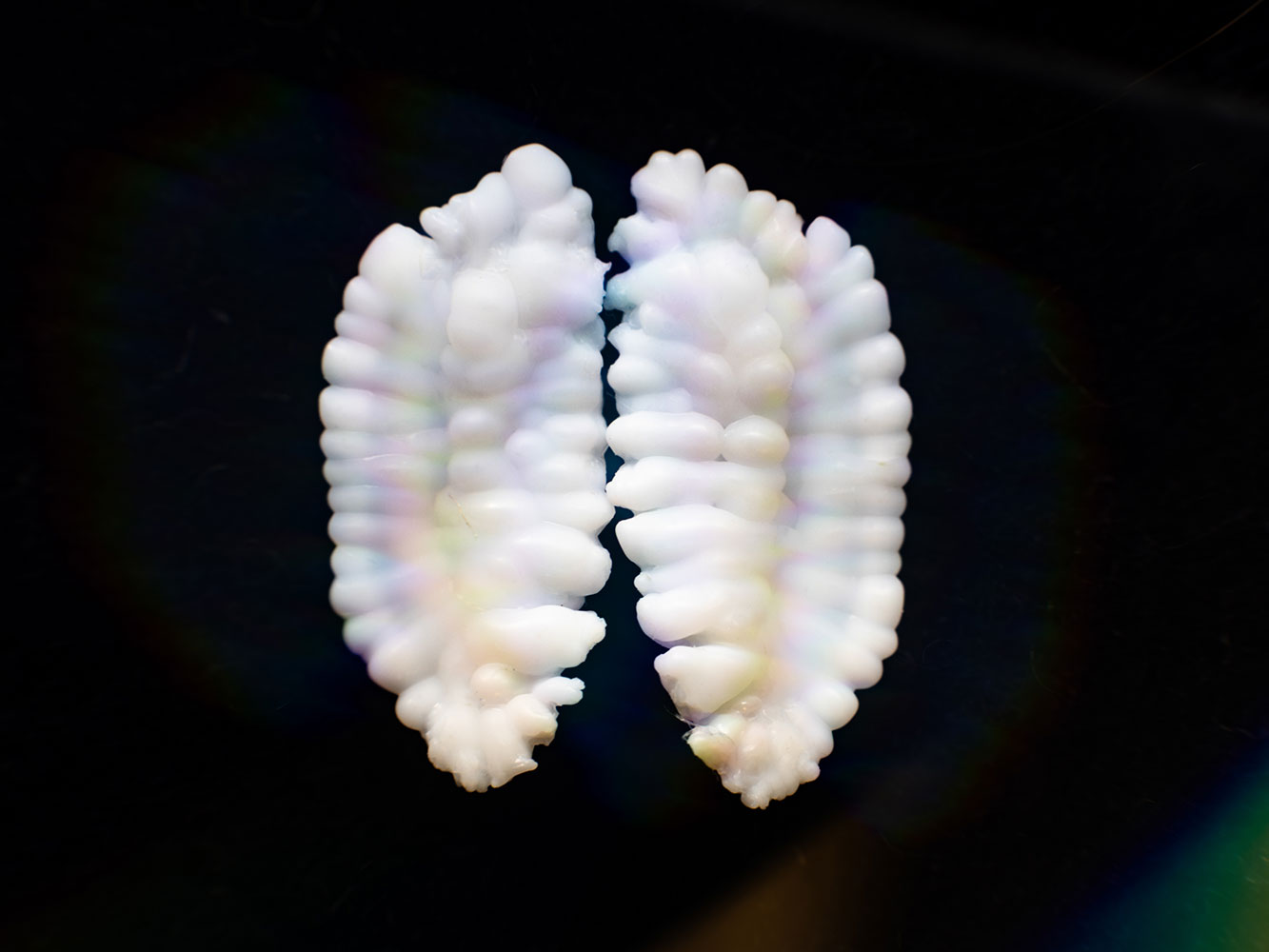
Our watery ancestors remain in their underwater world, and they too can still hear. Fish have ears, or otoliths, small internal stones of calcium carbonate. Scientists use otoliths to age the fish, but also to glimpse the past. Each otolith carries chronologies written in bone: migrations traced, seasons of hunger and abundance, waters remembered. Otoliths act as silent witnesses, like remote sensors, drifting like mini-submarines over sea beds that no human will ever reach. Fish listen in a different language, one of chemical cues and electrical impulses shaped by wild waves, tumultuous tides and circuitous currents. Water rumbles over and across the otolith, rendering auditory maps of the rhythmic subaqueous environment. Otoliths are biological listening devices, translating the ocean into form.
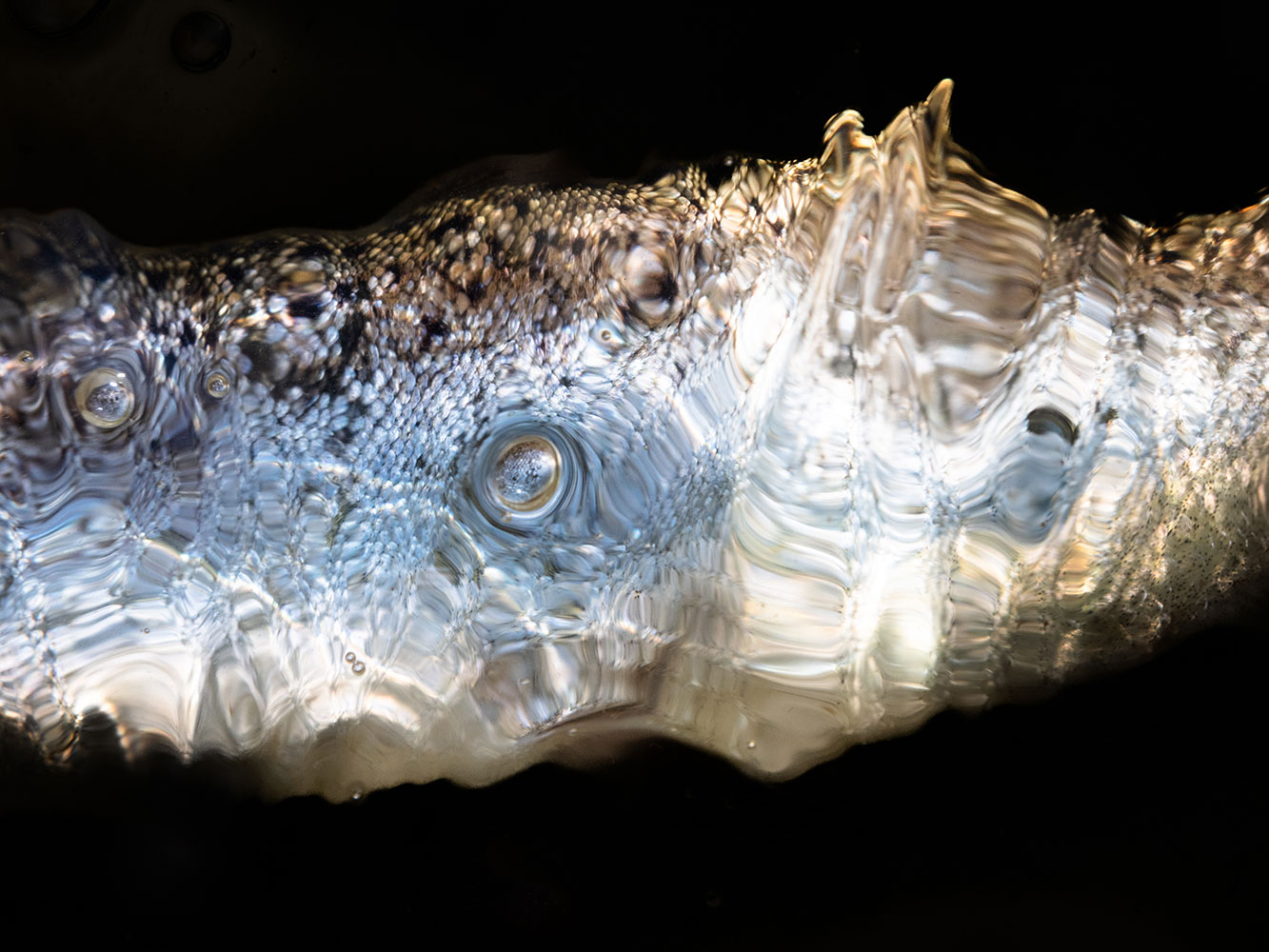
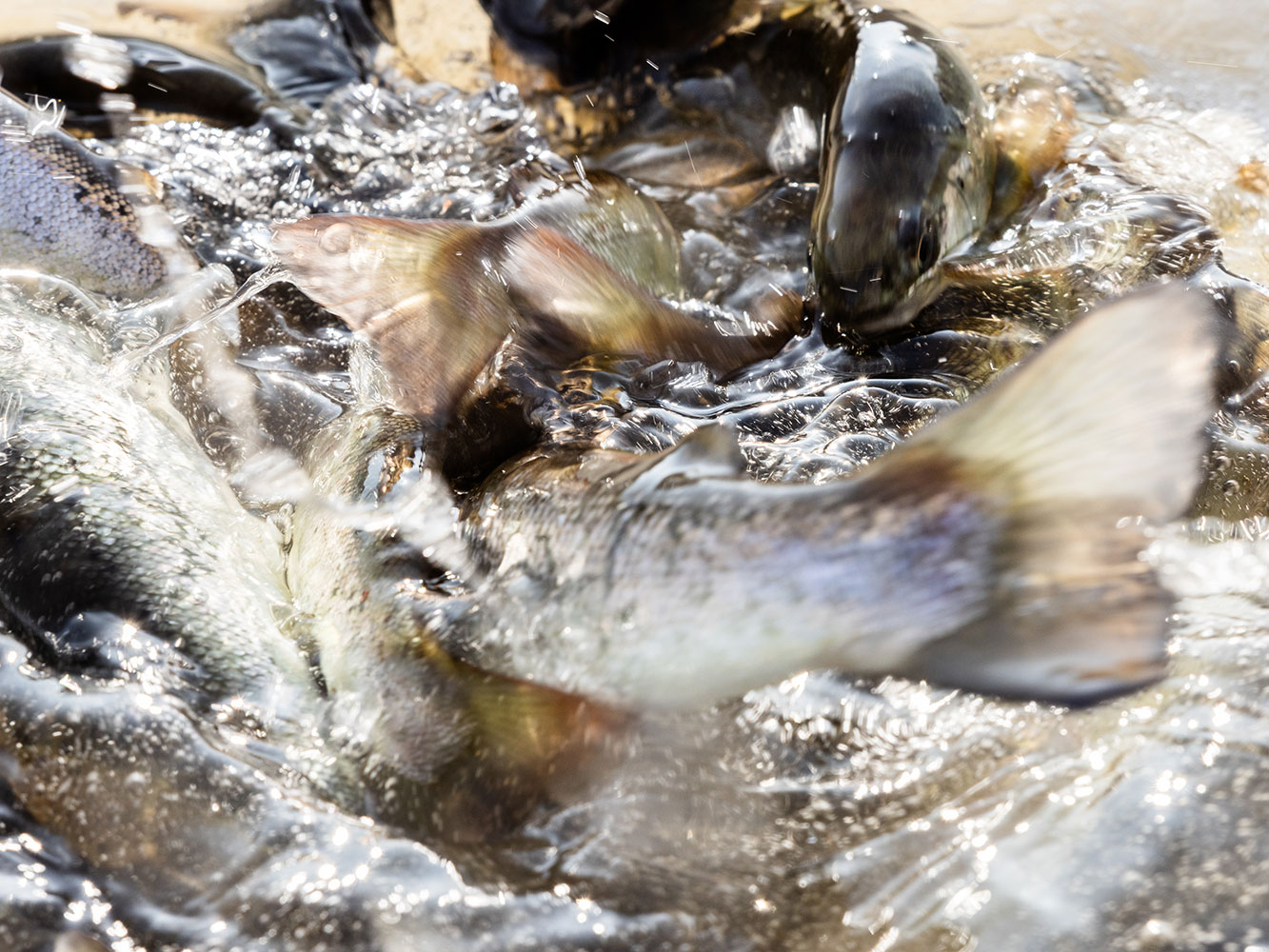
Salmon scales, too, speak their own language. Their lineridged surface illuminates a realm of invisible mapping and collective memory – where the salmon fed, when it moved, what waters shaped its life. When I visited the River Bush Salmon Station in Bushmills, Northern Ireland, I was moved to hear how scientists described each scale as a story in itself, a fractal of a whole landscape, an ordnance survey of lived waters. Their approach echoes Tim Robinson’s belief that maps are not fixed records but living archives. ( 3 ) Salmon offer us these interim reports, personal cartographies of their migrations from nascent river to open ocean and, with luck, home again.
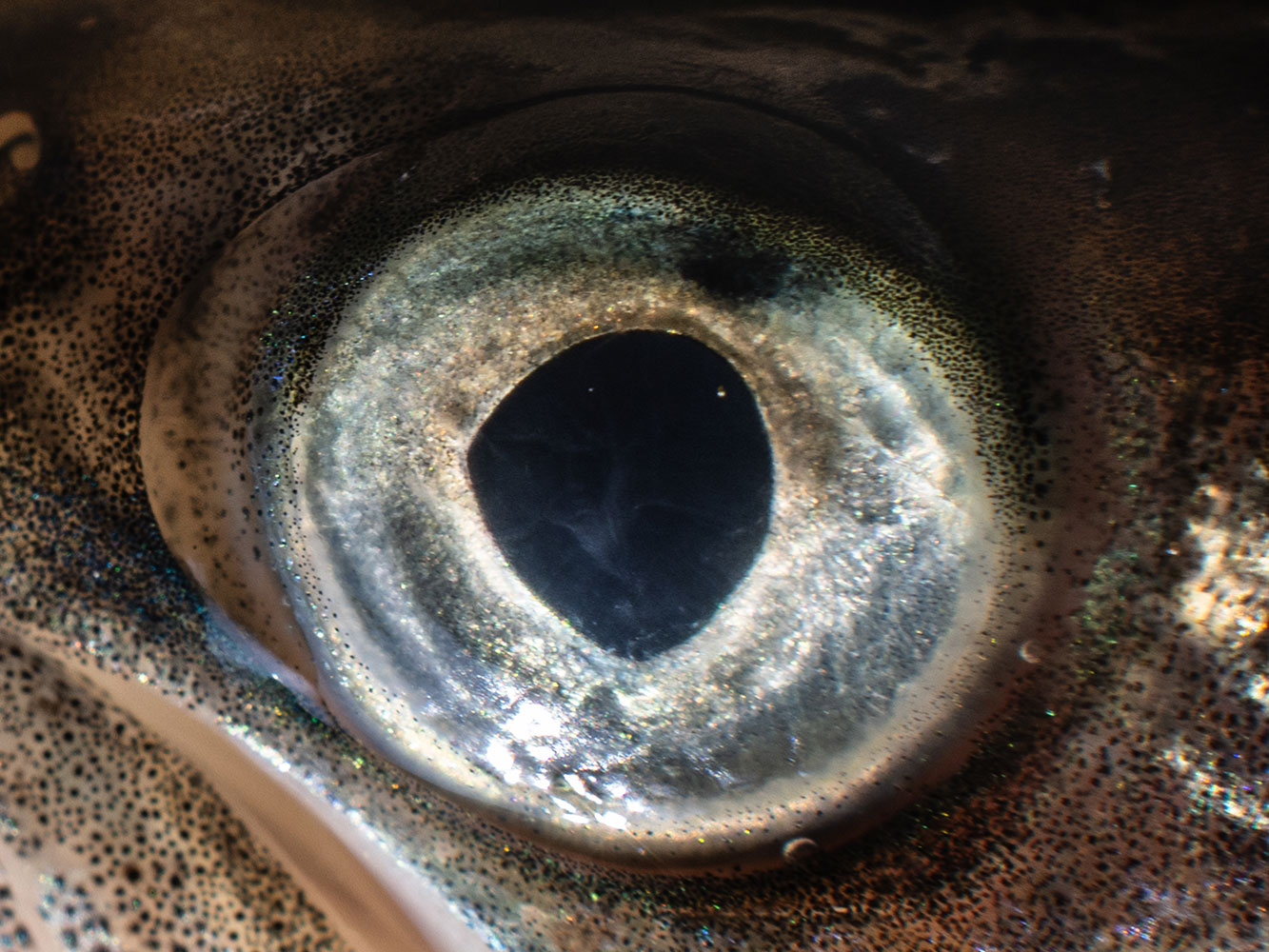
As maturing smolts, wild salmon imprint the scent and taste of their birth rivers before, in an extraordinary act of metamorphosis, adapting from river to ocean life. Their eyes shift from reading river reds to sensing brilliant blues; their gills reverse the direction of salt processing, pumping saltwater rather than absorbing it. They learn to surrender to the current, letting the sea cradle and carry them into a world of greater forces.
The juvenile salmon develop cells that sense the Earth’s magnetic field, a deep ancient compass connecting them to the planet’s molten core. Paired with the visual cues of sun and stars, this magnetic topography guides them through vast ocean corridors of belonging. We once believed that, by consuming salmon, we might inherit their sensory wisdom. Their myths carry on beyond their scale stories.
Growing eels, too, follow invisible celestial forces on a path homeward. Bordering five counties in Northern Ireland, Lough Neagh is home to a population of eels that undertake an incredible migration. During a new moon flood, the eels travel towards the saltiest part of the Atlantic, the Sargasso Sea, where adults spawn and die. The larvae drift back across the ocean home to the same lough.
The sea nettle jellyfish enters this story as numbers surge in warming waters. Photographed in the Lisbon aquarium, they occupy a fragile threshold between beauty and warning. These ghostly beings lack a brain, heart or lungs, and have become emissaries of the ocean’s altered rhythm and empty spaces.
The urgency of this moment is stark. In 2024, only two per cent of the wild salmon returned to the River Bush, down from thirty-five per cent a generation ago. Migrations have shifted, food webs have thinned. Lough Neagh is in ecological freefall. In the maritime territory controlled by the Republic of Ireland, Marine Protected Areas cover only eight per cent, a fraction needed to safeguard fish stocks and restore marine environments.
If fish carry the ocean’s memory, what happens when there is nothing to hold this ancient archive? What happens when the memory fades? When the salmon leave the Bush River for the last time, who will know their magnetic maps? Who will tell the stories once engraved in otoliths and scales? Sensing, remembering and renewal will halt as the ocean loses the registers of how it speaks.
We may once have funnelled sound with our shellshaped ears, but we are no longer listening. The acoustic fabric of the planet is fraying, disturbed by extinction, depletion and noise, its natural rhythms breaking apart. ( 4 ) We need a renewed understanding of our fellow beings – of fish cognition and awareness. If we wonder at their particularity, ‘how they think, feel, and learn, we may recognise the depth of our shared ancestry’, in the words of James Bradley.
Perhaps what is needed now is a different story, one in which fish are revered not as commodities but as kin, honoured as mythmakers, sensory entities and keepers of a planetary past.
Carson wrote that, ‘The more clearly we can focus our attention on the wonders and realities of the universe, the less taste we shall have for destruction.’ ( 5 ) Seventy-five years later, her invitation is more urgent than ever. It is time to pay attention, to listen below the waterline, to remember the ocean within.
( 1 ) Carson, R. (1951), The Sea Around Us. New
York: Oxford University Press. p.3.
( 2 ) Scientific American (2025),
https://www.scientificamerican.com/article/
our-ears-share-a-
common-ancestry-withfish-
gills
( 3 ) Robinson, T. et al. Mapping South Connemara:
Parts 1–29 Cashel, Carna, Cill Chiar’Ain:
Re-printed with Additions and Amendments
from Articles Published in the Connacht
Tribune between November 1983 and March
1985. Roundstone, Co. Galway: Folding Landscapes,
1985.
( 4 ) Bradley, J. (2023). Deep Water: The World in
the Ocean. (Scribe, 2024)
( 5 ) Carson, R. (1951), p.97.
Acknowledgements
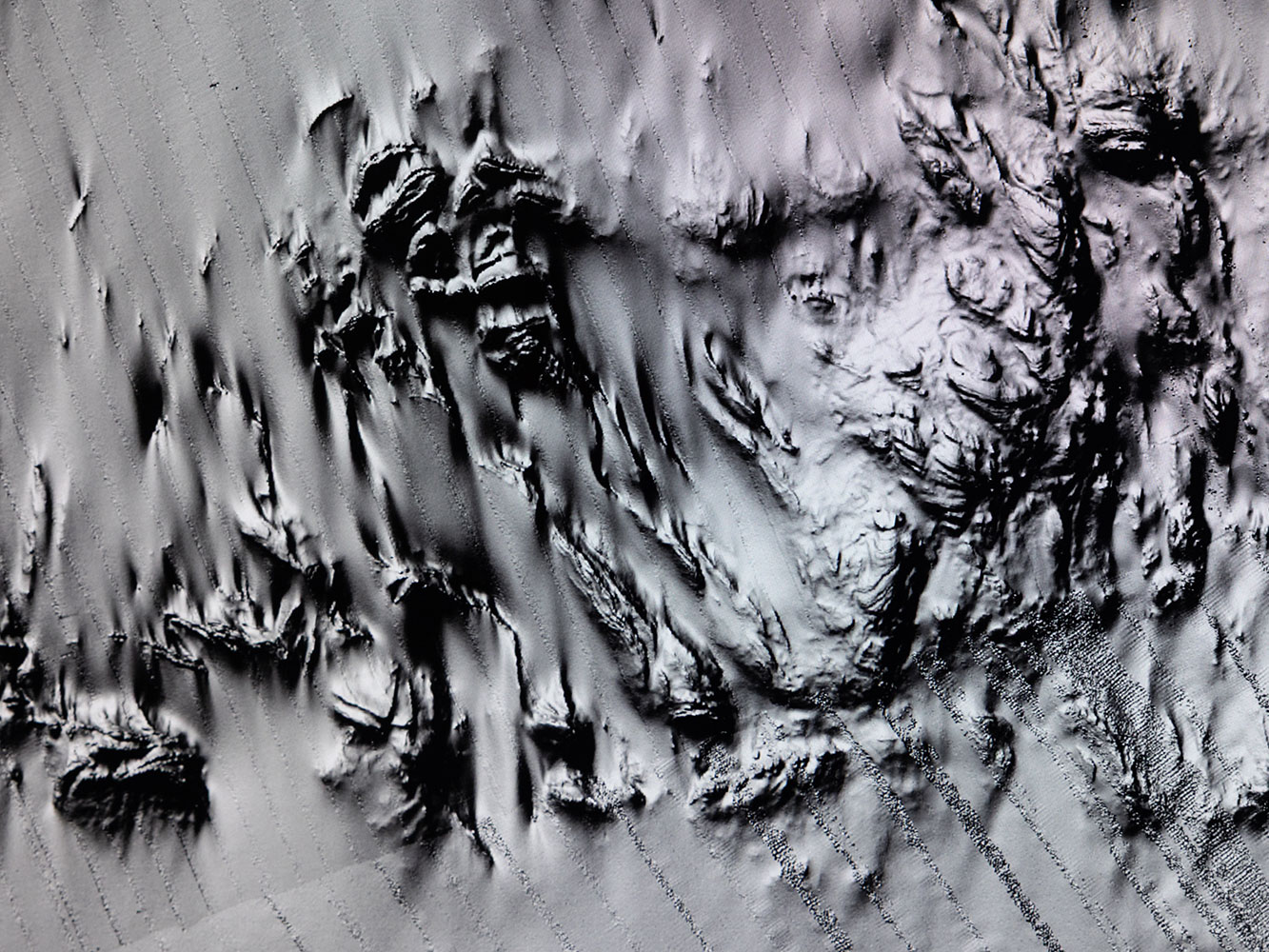
The artist wishes to thank Dr Ewan Hunter, Dr Adam Mellor, Dr Richard Kennedy and all of the team at the Oceanography and Limnology Group, Agri-Food and Biosciences Institute (AFBI), Northern Ireland. The Ocean Within was developed from a commission by Belfast Photo Festival, with the support of the National Lottery Heritage Fund and the AFBI. The Real Map of Ireland draws on data from INFOMAR, Ireland’s national seabed mapping programme. Funded by the Department of the Environment, Climate and Communications (DECC), it is jointly managed by Geological Survey Ireland and the Marine Institute. It is tasked with fully mapping Ireland’s territorial waters for the sustainable development of Ireland’s marine resources. Thanks also to Sean and Iseult for all of the ocean adventures.
Newsletter
Main Sponsorship
Institutional partners










Partners




Special support

